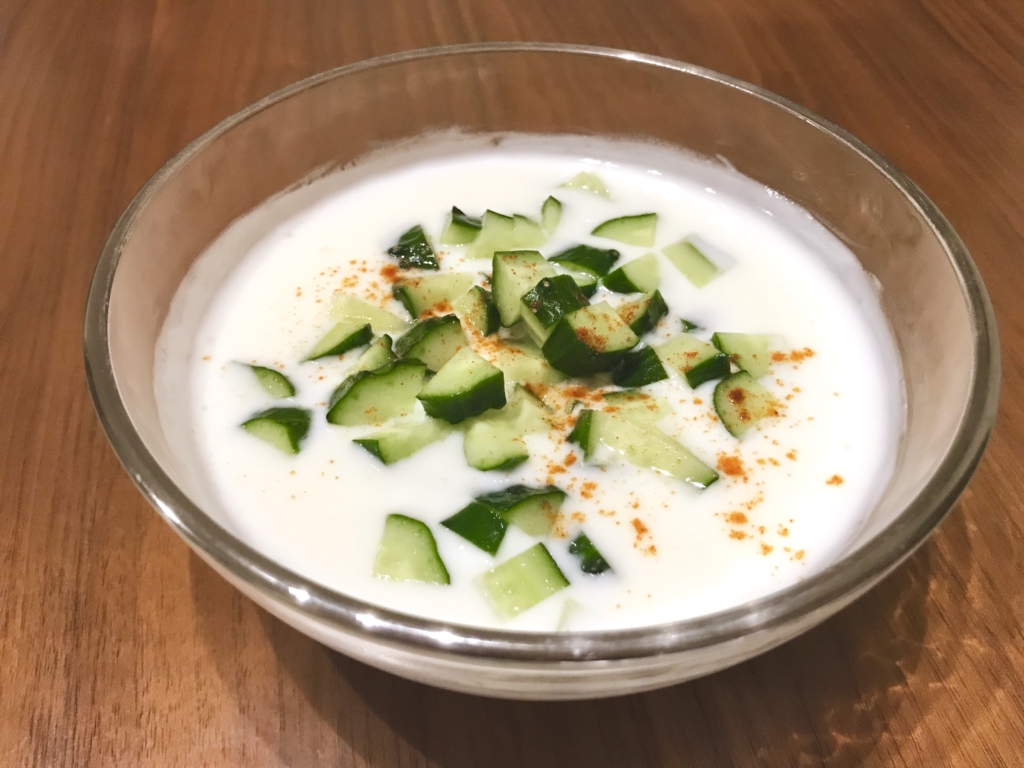
Mutton Biryani in a Le Creuset or Pressure Cooker
Translated from my original Japanese post (2019). 日本語の原文を読む →
Salut! It's Yoko, who has become biryani-obsessed.
I've been hooked on biryani lately. It's incredibly good, but there are so many recipes that it's hard to choose.
Not sure which one to follow...
If that's you,
I've put together a recipe that's relatively easy to make.
Making mutton biryani
There may be steps you're not used to,
so allow about 2 to 3 hours the first time.
In the classic Indian way of making biryani,
the pot lid is sealed tightly with a dough of flour and water,
but with a pressure cooker or a heavy pot such as Le Creuset or Staub, you can trap the steam well,
and the simmering time gets shorter too!
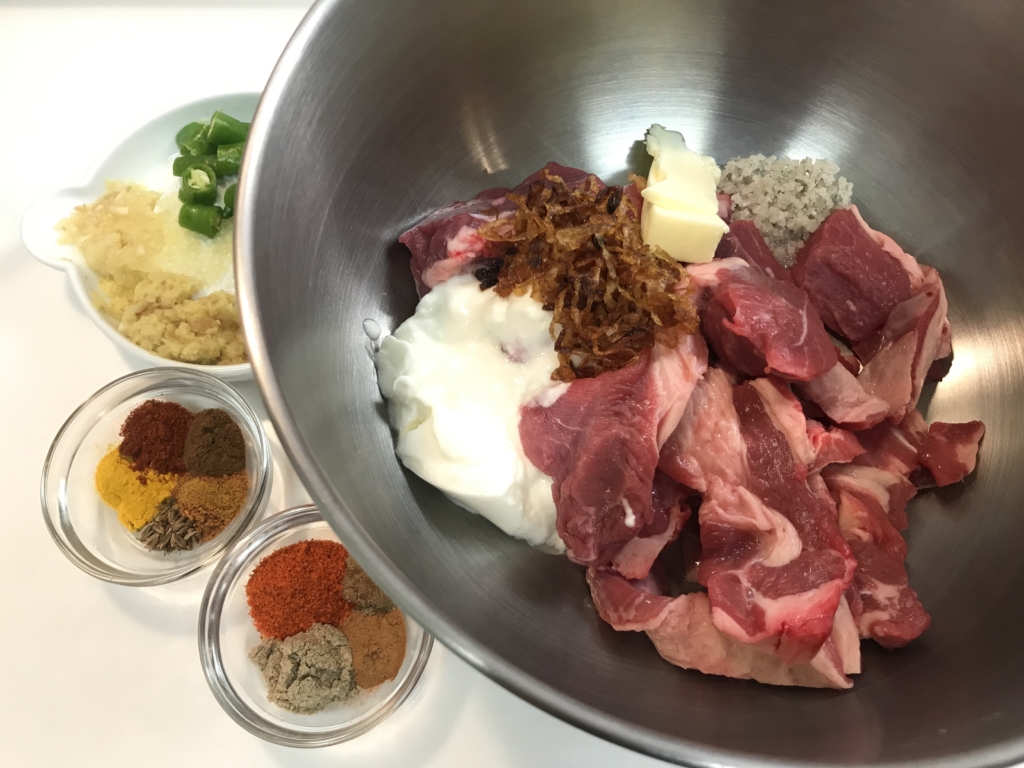
Here are the ingredients. It serves 2 to 3.
[Curry sauce (gravy)]
- 300 g lamb or mutton, cut into bite-size pieces
- 100 g yogurt
- 1/4 teaspoon each of spices
(turmeric, cumin seeds, garam masala, cloves, coriander, cinnamon)
- 1/2 teaspoon each of spices
(chili, cardamom, paprika)
- 1 teaspoon salt
- 1 clove each of garlic and ginger, grated
- 1 green chili, sliced into thin rounds
- 1 tablespoon ghee or unsalted butter
*Too many spices? You can use about 1 tablespoon of curry powder instead.
It will taste strongly of curry, though. I'd like the fresh aromas of coriander and cardamom to stand out,
so add those spices if you have them, or add chopped cilantro, mint, lemon and so on.
*You can adjust the heat with the amount of chili and green chili. If you don't have green chili, chili alone is fine.
Green chilies are very hot, and when I once put in 4 sliced ones I nearly died,
so be careful if you're not good with spice!
[Rice]
- 150 g basmati rice
- 1 L water
- 1 teaspoon spices
(cumin seeds, cinnamon, cardamom, cloves)
- 1 tablespoon unsalted butter or oil
- 1 tablespoon salt
*Basmati rice is the key, so please get some.
Jasmine rice can substitute, but it's softer, so shorten the boiling and finishing times.
Japanese rice is too sticky and springy and isn't suitable.
*Whole spices are best. Powdered works too, but it turns the rice light brown.
*The fat keeps the grains of rice from sticking together.
*Seasoning the rice with salt makes it blend with the rice touching the curry sauce.
Green chilies are very hot, and when I once put in 4 sliced ones I nearly died,
so be careful if you're not good with spice!
[Finishing]
- Fried onions from 1 onion
- 2 bunches of cilantro or as much as you like
- 2 bunches of peppermint or as much as you like
- Unsalted butter or ghee, as needed
*You can also add potatoes and so on.
*The fat is for richness, so it's optional. Fried onions are for umami, so also optional, but it's definitely better with them.
*Set aside a little cilantro and mint for garnish at the end.
How to make mutton biryani
I forced it into 3 steps, lol.
-
Prepare the [Curry sauce (gravy)] ingredients.
Mix well, rubbing it into the meat.

If you have time, let it rest in the fridge for at least 30 minutes, ideally 2 to 3 hours.
Resting the meat lets the yogurt tenderize it
and seasons it well.You can also prepare it the day before.
- Put step 1 in an oiled pot, cover, and simmer over low heat for about 45 minutes (in a Le Creuset).


In a pressure cooker, simmer over low heat for 20 minutes.

While the meat simmers, rinse the basmati rice quickly and soak it.

- Timing it so that step 2 is about done simmering, put the [Rice] ingredients, except the basmati rice, into a pot and bring to a boil.

When it boils, add the drained basmati rice.

After boiling for 2 minutes, take out half in a colander and lay it lightly over the meat.

Scatter half of the [Finishing] ingredients over it, then lay the rice boiled for 6 minutes on top.


Scatter the rest of the [Finishing] ingredients the same way, cover, and heat over medium-low for 3 minutes,
then over low heat for 15 minutes.

Turn off the heat and let it steam for 10 minutes. Done!

*You can do the final cooking in the pressure cooker itself,
but in a pot with a large diameter you may not be able to layer the rice. In that case, move it to a slightly smaller pot.
The color of the rice is nicely uneven.
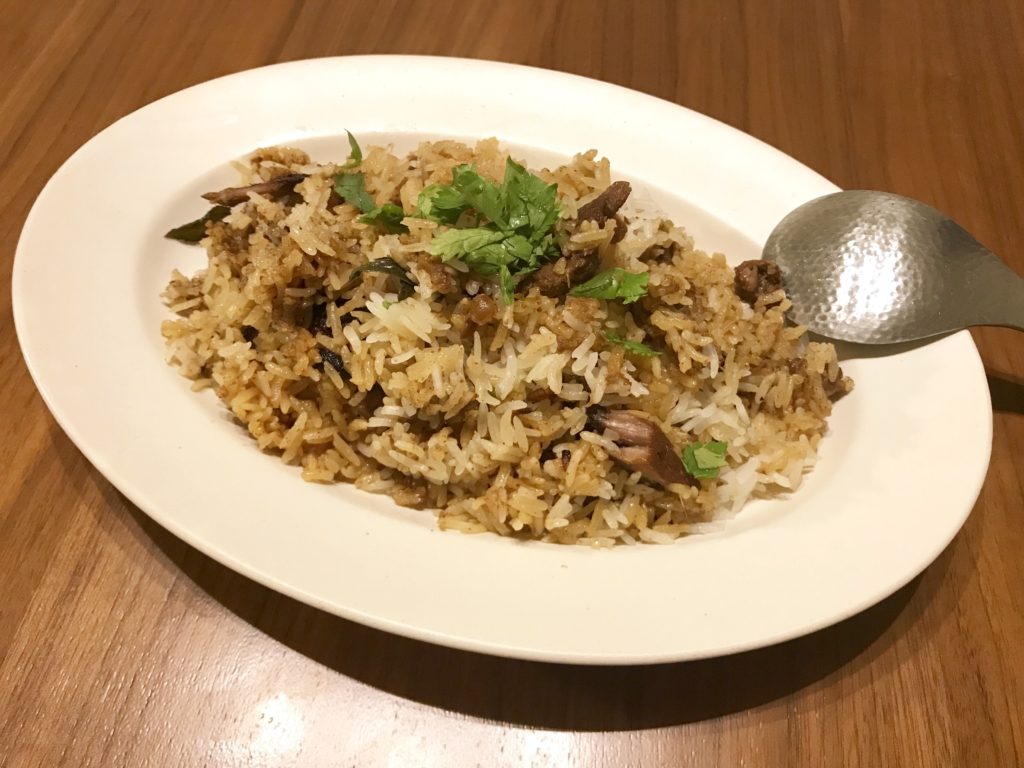
The meat is tender from the slow simmering! Perfect.

A pressure cooker or Le Creuset shortens the cooking time, which is great.
How to make fried onions
Fried onions are the source of umami and an essential ingredient for biryani.
In this article's method they are used only at the end when finishing the biryani,
but they're so good that, if you can, I'd like you to add them when marinating the meat too.
Slice the onion thinly, perpendicular to the fibers.

Heat 4 tablespoons of oil over medium heat and fry the onion.

At first it may feel like too little oil, but once it softens to about this point, it's fine.

When the onion is just covered in oil, don't touch it much until it colors; stir only now and then.
Once it starts to color it burns quickly, so turn the heat down to low.

When it's all brown, lift it onto paper towels.

It takes about 20 minutes.
If there's leftover oil, use it when finishing the biryani.
Ingredients for a more authentic biryani
For those who want to take biryani even higher,
here are some notes on spices and such.
Bay leaf, mace, black cardamom, star anise, kalpasi
They may be hard to find, but they add complexity to the aroma.
Look for them at Indian grocery stores or buy them online.
By the way, bay leaf here is not laurier!
In English-speaking countries laurel is called bay leaf,
but what's used in India is Indian bay leaf.
You can tell laurel and bay leaf (Indian bay leaf) apart by the leaf veins.
The long, slender one with lengthwise veins like bamboo grass is the bay leaf.
If you think "collecting that many spices is a hassle," there's a blend made for biryani,
biryani masala, and you can just use that.
Kewra water (Kevda water)
Kewra water is an essence extracted from flowers of the screwpine (Pandanus) genus,
often used in Indian restaurants.
In biryani it seems to be sprinkled on at the final cooking stage to add fragrance.
Saffron and food coloring

Steep a few strands of saffron in body-temperature water or 1 tablespoon of milk and sprinkle it over the rice when finishing the biryani.

Saffron is expensive, so it doesn't seem very common in India, but it gives a very gorgeous aroma.
In India, food coloring that turns the rice orange is also used,
so pursuing a gorgeous look could be fun too.
That was how to make mutton biryani, which is addictive once you've tried it!
Some ingredients are hard to get, but make good use of online shopping and give it a try.
See you next time. Au revoir!