What Makes Biryani So Addictive?
Translated from my original Japanese post (2019). 日本語の原文を読む →
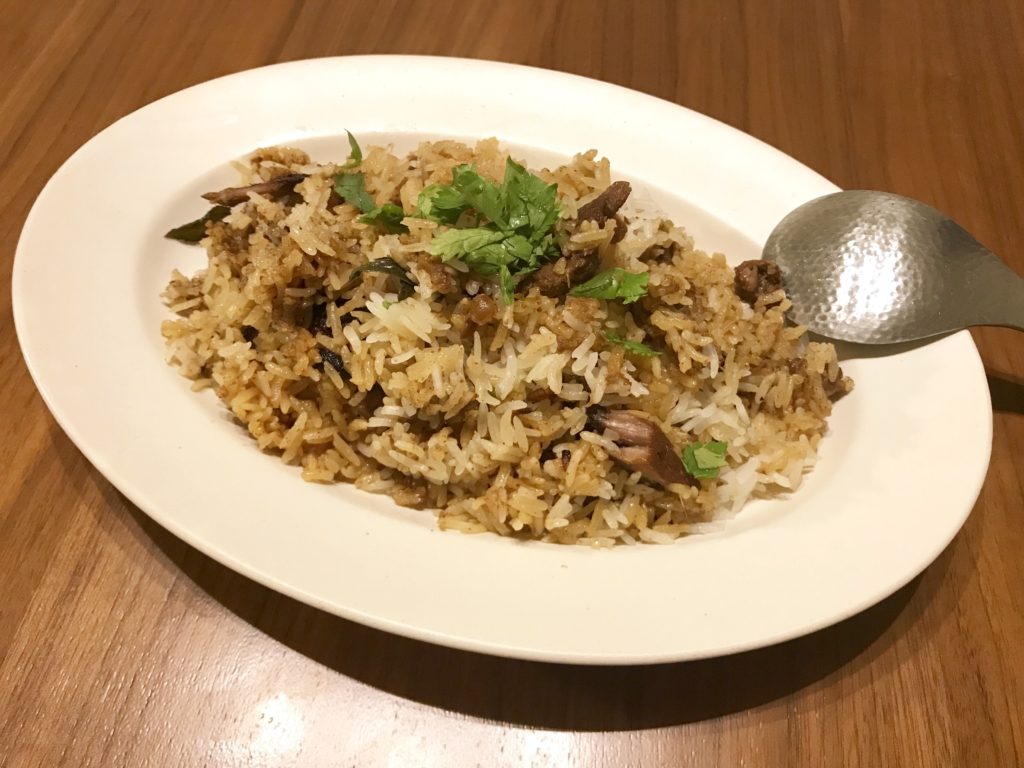
Salut! It's Yoko, a proud member of the Japan Biryani Association.
Have you heard of "biryani," a rice dish that's becoming a trend in Japan?
I made it for the first time a few days ago, and it was so outrageously good that my head is now full of biryani.
If you're a food lover with an obsessive, nerdy streak, or someone who loves spices and herbs,
I think it's only a matter of time before you fall down the biryani rabbit hole.
What is biryani?
Biryani,
to put it roughly, is curry-flavored mixed rice.
There are non-vegetarian biryanis that use meat or fish, such as mutton biryani, chicken biryani and beef biryani,
and vegetarian biryani, which uses no meat or fish at all.
The rice is "basmati rice," India's premium rice.
It originated in the Islamic world, so pork doesn't seem to be used.
A typical biryani is made roughly like this ↓
- Make a curry sauce
- Boil the rice (about halfway)
- Layer the curry sauce (gravy), half-boiled rice and herbs in a pot and steam it
"Wait, isn't that just curry? What's the difference?"
"Why layer the curry and rice?"
If you're thinking that, there's a deep reason behind it.
And that's exactly what tickles the nerd in all of us...!
The origin of biryani
First of all, which country does biryani come from?
There are various theories, but the word biryani is said to derive from the Persian "beryan" (to roast or steam),
and it's thought that the dish spread east from the Islamic world (Iran, Saudi Arabia, Egypt and so on),
and that biryani was born when it met Indian spices.
Today it's a national dish eaten across India and in neighboring countries such as Pakistan and Bangladesh,
so calling it Indian food is fine lol.
You can even eat it at street stalls.
The Muslim population is especially high in southern India, so many biryani shops gather there,
and the city of Hyderabad is even called the holy land of biryani.
Recently the number of places in Japan serving authentic biryani has grown, too.
It's become well known enough that there are even biryani specialty shops, so I couldn't not try it.
How to make biryani

"Mutton dum biryani"
It sounds like a magic spell, but by the end of this post you'll understand what it means.
When you start looking into what biryani is, you run into the phrase
dum, pakki, kachchi.
You're probably thinking "What on earth?", so I'll explain them one by one.
Dum
Dum is a cooking method where you put the ingredients in a pot and steam them with the lid tightly sealed so no steam escapes.
Biryani is generally made this way.
In Japan, it's a bit like "charcoal-grilled yakitori," I guess?
As in, it's yakitori, but not the gas-grilled kind.
If you cook the rice in a rice cooker and combine it with the sauce from a pot afterward, it's not "dum."
Pakki
Pakki means "cooked" in Hindustani.
Pakki is a style where you first make the curry sauce (gravy), then alternate it in layers in the pot with rice that's been boiled about halfway,
and the rice finishes cooking in that moisture.
Most biryani is pakki biryani.
Kachchi
Kachchi means "raw" in Hindustani.
Raw meat is marinated with spices and yogurt and left for 30 minutes to a few hours,
then topped with half-boiled rice and cooked over low heat for about an hour. That's kachchi biryani.
When you add the rice, you sometimes add small potatoes too.
Raw rice (Hindu style)
Unlike pakki and kachchi, which use half-boiled rice, this is a style of biryani cooked from raw rice.
Pulao, a similar mixed rice dish, is also made from raw rice.
Pulao apparently uses fewer spices than biryani and has a more even flavor.
Ah, I want to make pulao someday too...
The difference between pakki and kachchi
"What are the pros and cons of each method?"
There were so many recipes at first that I got confused too, but the first one I made was pakki biryani.
More than whether you start from raw meat, what you have to watch in biryani is the rice.
With biryani, you need to finish the rice so it's fluffy and separate, like fried rice, not sticky.
If the rice is undercooked, or has too much moisture and turns porridge-like, the biryani is ruined.
I think this is probably the hardest part of biryani.
The more moisture there is in the rice and pot, the more carefully you have to control cooking time and heat, which is tough,
so I think it's best to try them in this order: Hindu style (raw rice) → pakki → kachchi.
There's an awful lot of mysterious jargon, and it makes you curious
Biryani is a fairly difficult dish

I think making biryani is pretty difficult.
Make fried onions without burning them
Blend lots of spices and herbs
Boil the rice, and only partway at that...
Cook the rice in a pot
Boil the meat until tender
Even this short list has far too many steps, and the skills required are fairly high.
But that's exactly why it's rewarding to make, and you get a real sense of accomplishment when it's done.
The seemingly complicated method of layering sauce and rice and steaming it has a good reason, too.
When layered, you get spicy, rich rice that touched the sauce,
and rice scented with spices and herbs that didn't, which creates a complex flavor.
It's similar to curry, but curry has a lot more liquid, so it can't do this.
It's hard, so you want to master it!
Biryani is outrageously delicious!

Light, fluffy rice perfumed with a wide variety of spices and herbs.
Because the rice and sauce aren't mixed, the seasoning has light and dark spots that you never tire of, no matter how much you eat.
It's completely different from curry, though they look alike.
Even here in Japan, where there's so much delicious food,
there was still a flavor I had never tasted before...
That was the huge shock I felt the first time I ate biryani.
It's so delicious you can't forget it once you've tried it!
So this time I talked about how delicious and deep biryani is.
If you're even a little curious about biryani, I want you to run to a restaurant that serves it right now.
If you'd like to make it yourself, you'll face the "where do I buy the spices?" problem,
but many of them aren't available at supermarkets, so it's best to buy everything at an Indian grocery store or online.
I'll cover how to make biryani in another post.
See you next time! Au revoir!