Homemade Blueberry Jam in a Le Creuset
Translated from my original Japanese post (2019). 日本語の原文を読む →
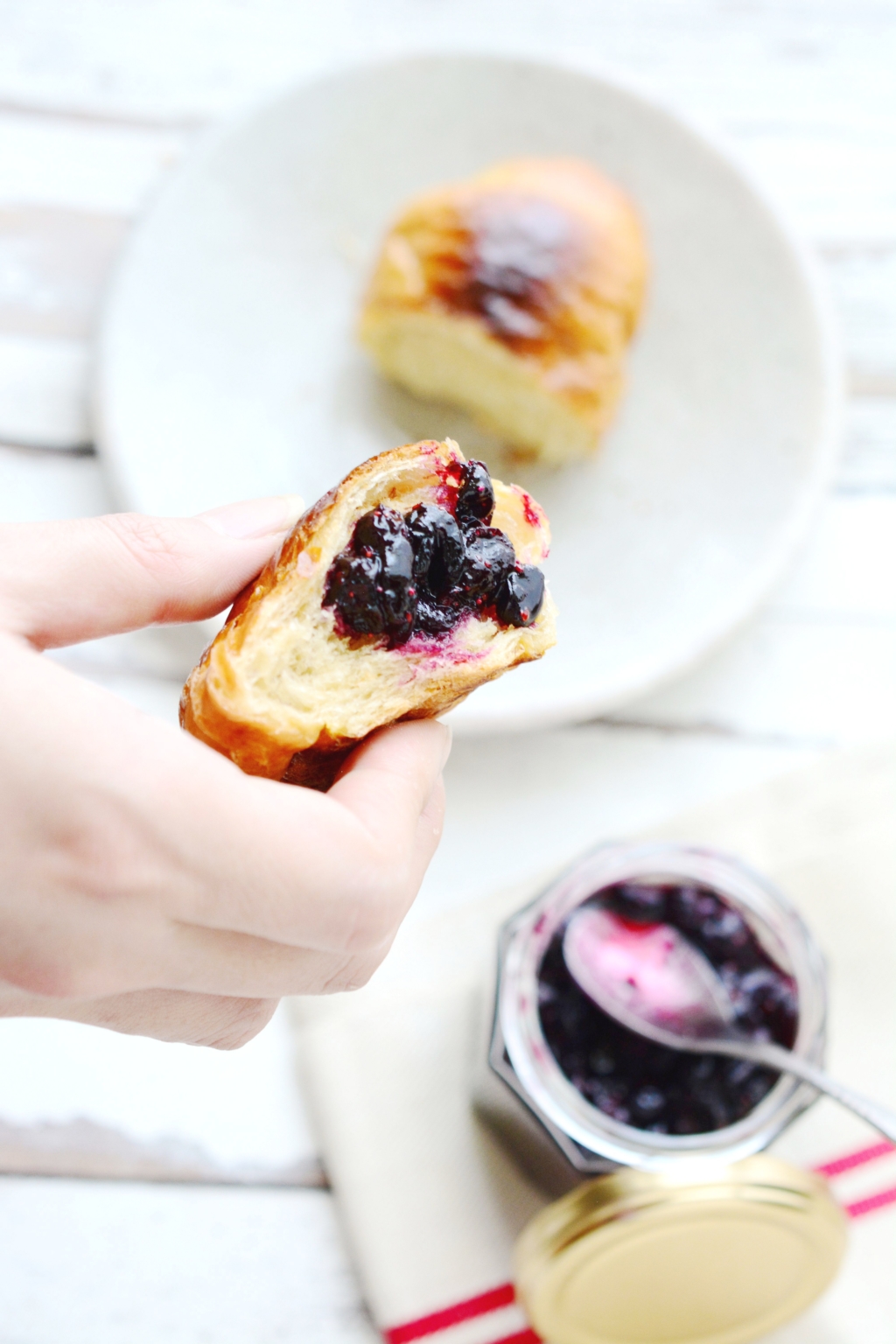
Salut! It's Yoko, a bread-and-milk-for-breakfast person.
The other day a friend gave me some blueberries, so I made jam.
I think quite a few of you bake your own bread, and spreading homemade jam on homemade bread doubles your quality of life, so let's make some!
How to Make Blueberry Jam (in a Le Creuset)

- Blueberries: as many as you like
- Granulated sugar: 30% to 50% of the weight of the blueberries
- Lemon juice: 1 tbsp
* This time I used 72 g of granulated sugar for 147 g of blueberries.
- Wash the blueberries and remove any stems and debris.
- Put the blueberries and sugar in a pot and leave them for a while. When liquid comes out, heat over medium-low. This time I used a Le Creuset.
- After simmering for about 10 minutes, quite a lot of liquid comes out. Skim off any scum.
- After reducing for a few minutes, return the blueberries to the pot and add the lemon juice. Simmer for about 5 more minutes, stirring so it doesn't scorch.
- Drop a little into ice water. If it holds together, it's done.
* If it spreads out in the water, it needs more simmering. - Pack the hot jam into jars sterilized in boiling water, and you're done.


When sugar and blueberries are mixed, osmosis draws liquid out of the blueberries.

Wait a bit after adding the sugar so you don't put it straight on the heat and scorch it.
With frozen blueberries, the ice around them melts and releases liquid, so it's fine to heat them fairly soon.

Take out just the fruit and crush it lightly.

While you crush the blueberries, keep reducing just the blueberry liquid.


By reducing only the liquid first, the liquid reaches a higher sugar concentration than the fruit,
and that draws water out of the blueberries.

Losing that water makes the jam keep better and gives the blueberries a firmer texture.


For long-term storage, fill the jars to the brim so no air gets in.
This batch was small enough to eat up quickly, so I cut corners and just wiped the jar with disinfecting alcohol spray, lol
Why Put Lemon Juice in Blueberry Jam?
"Jam is sweet, so don't we not need lemon juice?"
No, it's better to add it, even if it feels like a bother.
Lemon juice does three things for you.
- It thickens the jam
- It improves the color
- It sharpens the flavor
The acid in lemon helps the jam thicken.
Jam thickens through a reaction between the pectin in the fruit, sugar and acid,
and blueberries are low in pectin, so add lemon to make up for it.
Also, lemon juice improves the color.
Enzymes in fruit cause discoloration when they touch air,
and the acid in lemon juice suppresses the action of those enzymes.
And that's not all! Acid also tightens up a flat, blurry flavor,
so the version made with lemon juice makes tastier jam.
Sugar Helps Jam Keep and Gives It Shine
Add the sugar too, if you can.
Partly it just tastes better with some sweetness,
but adding sugar when making jam also helps it keep and gives it a glossy finish.
First, adding sugar raises the boiling point above 100°C, which kills all kinds of bacteria.
Osmosis also draws water out of the fruit.
This high heat and dehydration from the sugar help the jam keep.
Even after cooking, the high sugar concentration means microorganisms can't survive.
In addition, the sugar and the acid from the fruit and lemon juice link the pectin into a net,
trapping water inside, so gelling is promoted and the jam turns glossy.
How Much Sugar Jam Needs
By the way, pectin needs a sugar content of 60 to 65% to gel.
Fruit contains roughly 10% sugar, so weigh the fruit and work out how much sugar it already has,
then add sugar to make up the remaining 50% to 15% or so.
Pectin Is What Thickens Jam
So what is this "pectin" that has come up so many times?
Pectin is a natural polysaccharide found in the cell walls of plants such as fruit, and citrus peel is especially rich in it.
This pectin is a natural "gelling agent".
* Gel means a gel-like thickness.
In other words, jam thickens because simmering the fruit breaks down the cell walls and releases pectin.
Sugar is effective for extracting pectin.
When you add sugar, osmosis draws water out of the fruit.
The pectin comes out along with it.
The amount of pectin varies a lot by type of fruit.
High in pectin: citrus fruits (lemon, grapefruit, mandarin), plums, apples, etc.
Low in pectin: blueberries, peaches, persimmons, pears, bananas, pineapple, etc.
The amount also varies with ripeness.
Underripe fruit has little pectin,
and overripe fruit has its pectin broken down, so it's a tricky one.
Blueberries are low in pectin,
so adding lemon juice and sugar is the trick to getting blueberry jam right.
But if you're watching your sugar, or want to make jam from fruit or vegetables low in pectin,
it's a good idea to use store-bought pectin.
So that's how to make homemade blueberry jam!

See you next time. Au revoir!