Soaked Pasta: The Trick for Fresh-Pasta Chew in Less Time
Translated from my original Japanese post (2019). 日本語の原文を読む →
Salut! It's Yoko, your food blogger.
Have you heard of "soaked pasta"? It's been featured on Japanese TV shows like Hirunandesu and Asa Chan!
As the name says, you soak dry pasta in water first, and apparently when you boil it afterward, it comes out chewy and springy, just like fresh pasta...
As a total pasta lover, I couldn't not test it, so I gave it a try!
- Why soaked pasta turns out chewy
- How to make soaked pasta
- The benefits of soaked pasta
I'll walk you through all of this!
Why does it get chewy?
The starch in wheat flour comes in two types: amylose and amylopectin.
Amylose dissolves easily in hot water, while amylopectin does not.
Rice contains both too: more amylopectin and less amylose gives a sticky, chewy texture, and the opposite gives a dry, crumbly one.
Soaking the pasta gets it closer to fresh pasta
To gelatinize the amylopectin (make it sticky), which is the key to the chewiness, water molecules need to get in between the starch molecules.
But amylopectin doesn't dissolve easily in hot water, and unlike fresh pasta, which contains moisture, dry pasta has zero moisture at its center!
So the idea is that soaking the pasta in water for a good while brings it as close to fresh pasta as possible,
which lets the starch gelatinize more fully than usual and creates that chewy texture.
It's the same principle as soaking rice before you cook it.
How to make soaked pasta
Let's make it.
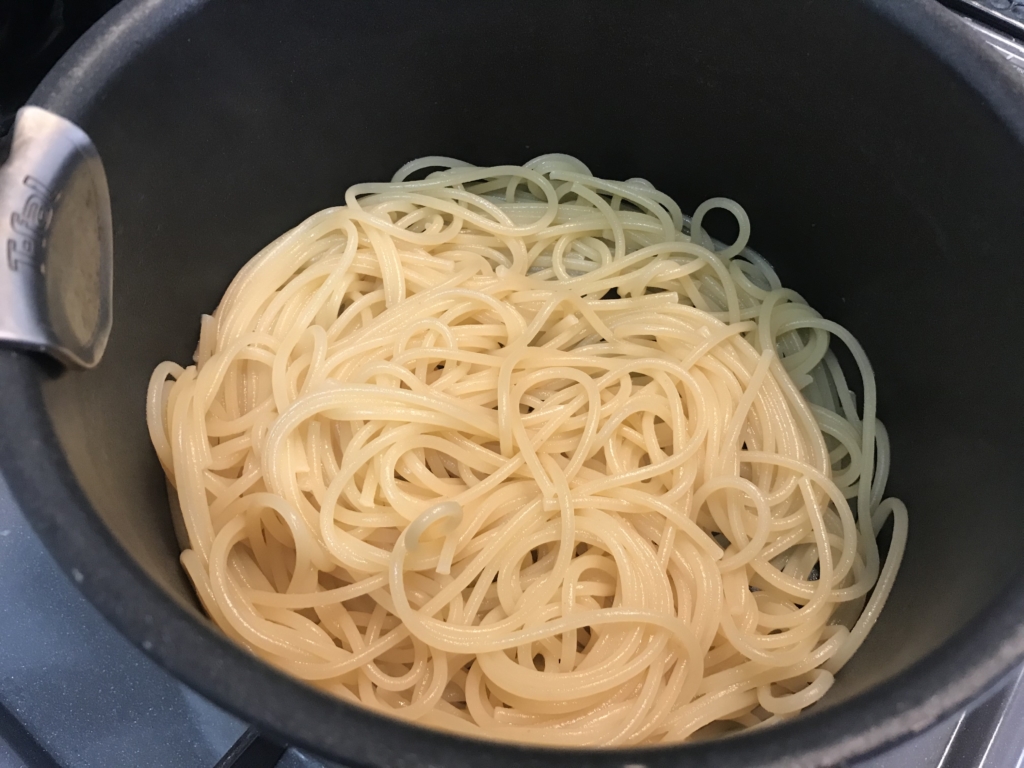
All you need is a container big enough for the pasta, water (1 L), and pasta (1 serving). That's it!

After an hour and a half, it's ready. It should look whitish, and feel limp and floppy when you touch it.

Soaked pasta keeps in the fridge, still in its water, for about 3 days,
so the moment you think, "I want pasta today!", just get it soaking. JUST DO IT.
Pour the water from the soaked pasta into a pot, bring it to a boil, then add the pasta and cook it (salt as you like).

The cooking time is just 1 minute.
You can also skip boiling and heat it together with the sauce, so it's super quick!
All the good things about soaked pasta
It saves time and money!
The usual spaghetti is 1.6 mm thick and takes about 8 minutes to boil.
Soaked pasta takes 1 minute. Even counting the soaking time, that's impressive.
And with such a short cooking time, you save on gas, too!
Chewy texture!
Your everyday dry pasta turns into a slightly luxurious, chewy, fresh-pasta-style dish.
If you make it with a wide, flat pasta like fettuccine, people might mistake it for fresh pasta...
It's perfect with rich pasta sauces!
The chewy texture of soaked pasta goes especially well with rich sauces.
Oil-based pastas like peperoncino suit pasta with a bit of bite left in the center, al dente,
so try combining soaked pasta with thick sauces like meat sauce or cream sauce.
I used it for napolitan (Japanese-style ketchup spaghetti).
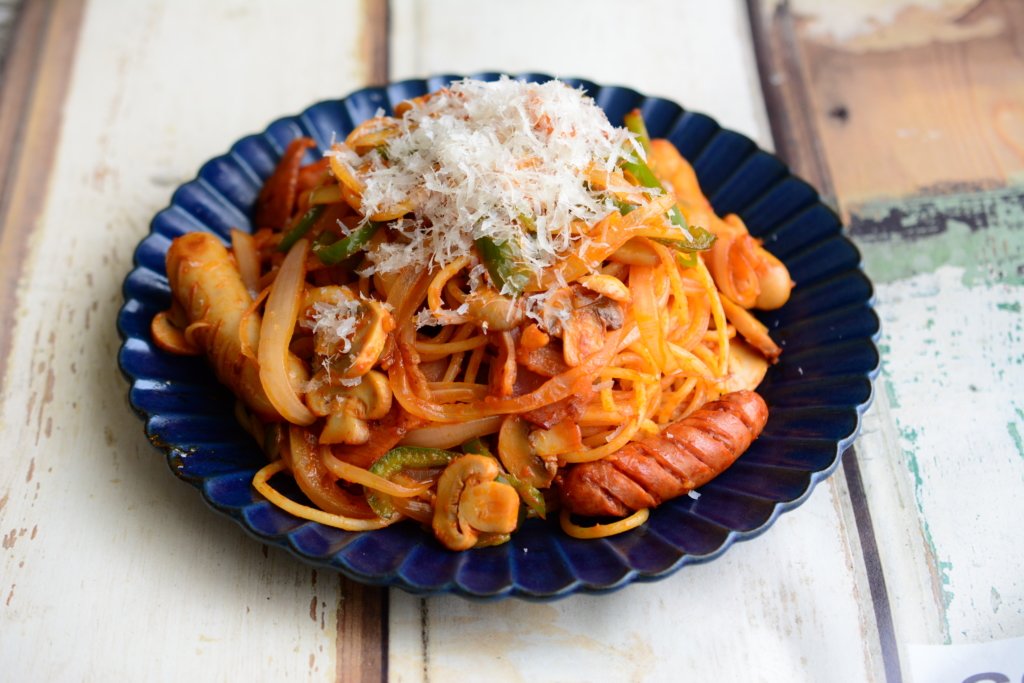
It had a lovely bouncy, chewy texture, and I was very happy with how it turned out.
If you're curious, give it a try.
See you next time. Au revoir!