Nikujaga Sweetened with Amazake
Translated from my original Japanese post (2019). 日本語の原文を読む →
Salut! It's Yoko, food blogger.
The other day I found the amazake (sweet fermented rice drink) I was given when I visited my parents' home sitting in my fridge.
I don't usually drink amazake much... but somehow I brought it back with me.
Drinking it straight was a bit much, so I thought about whether I could cook with it.
After all, amazake is made from koji (rice mold), right?
And koji is what makes shio-koji (salted koji) so famous for making food delicious.
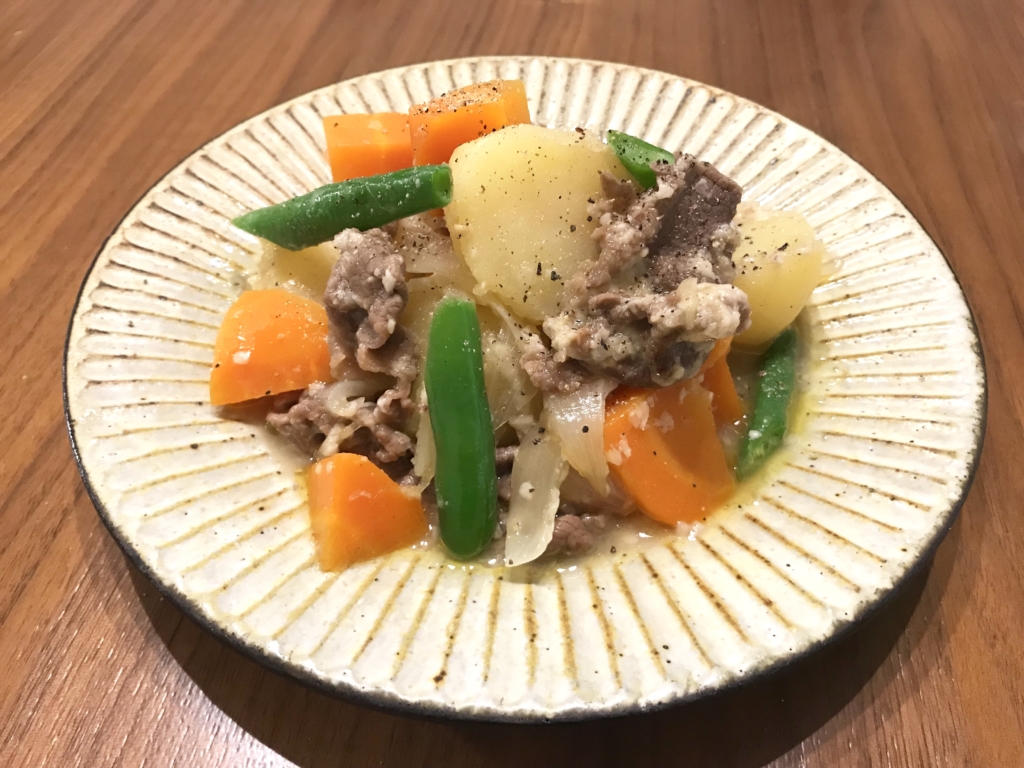
So why not use amazake like shio-koji?! That's how I came up with today's amazake nikujaga (beef and potato stew).
Surprisingly, it's so easy and delicious you could make it in your sleep.
Amazake Nikujaga
Ingredients (serves 4)
- 150g thinly sliced beef
- 1 onion
- 2 potatoes
- 1 carrot
- Green beans (if you have them)
- 100ml amazake
- About 300ml water
- 1 dashi pack
- 1 tablespoon sesame oil
- 1 teaspoon salt
- Pepper, to taste
Using May Queen potatoes or beveling the edges keeps them from falling apart while simmering.
Cutting the carrot into slightly smaller bite-size pieces and the potatoes into slightly larger ones gives a nice color balance.
Amazake varies a lot in flavor depending on the kind, so depending on yours, you can reduce the water and use more amazake.
It's fine to go up to about 300ml (adjust the water and salt as you taste).
Be careful, though, because too much makes it sweet.
If you usually make dashi, use it instead of water. If you don't have dashi, just toss a dashi pack into the pot!
How to Make It
Stir-fry the beef and the bite-size vegetables in oil.

This time I stir-fried the beef first and took it out, but if that's a hassle, it's fine to fry everything at once.

Once everything is coated in oil, add the amazake, water, salt and dashi pack! Simmer over medium-low heat for 15 to 20 minutes.


When the potatoes and carrot are soft, it's ready.

Garnish with boiled green beans, sprinkle with pepper, and it's done!
Please don't skip the pepper, it really sharpens the flavor!!
Mmm, the potatoes are so soft and comforting.

It's dizzyingly easy, and the umami of the amazake adds great flavor, so if you're tired of regular nikujaga or want to use up a lot of amazake, give it a try!
Kayanoya Dashi Takes Everyday Cooking Up a Level
Finally, I've used Kayanoya dashi packs for years.
Kayanoya is a brand of the Kubara Honke Group, a Fukuoka company founded in 1893 (Meiji 26),
and its dashi uses "ago" (flying fish), which is minor in Tokyo but popular in Fukuoka.
That "ago" is the key, giving a depth and umami that bonito can't.
It seems to have become well known recently, and it often comes up on Twitter.
I went to Kayanoya and they were selling an Osaka-only dashi! I got to taste it, and the umami is outstanding, just my style👍#Kayanoya#OsakaOnlyBlendedDashi pic.twitter.com/cA1UvsBCm5
— no~nbiri korokoro (@no_n_koro) June 9, 2019
My father's side of the family is from Fukuoka, so my family's ozoni (New Year soup) is Hakata-style ozoni,
and I got hooked on Kayanoya's ago dashi the first time I used it in Hakata ozoni. I've loved it ever since.
These are the three I have on standby at home right now:

The one in the middle is the most versatile and easy to use.
It's free of chemical seasonings and preservatives, which is reassuring, and best of all you don't have to make dashi from scratch. lol
You can also tear the pack open and eat the dashi ingredients too.
Dashi packs made with ago are almost never sold in supermarkets in the Kanto area, so they also make a welcome gift.
If you're tired of your usual dashi, or want to try a slightly richer dashi pack, give it a try.
See you next time. Au revoir!