Paris Butter Tasting: Échiré, Bordier and Three More
Translated from my original Japanese post (2018). 日本語の原文を読む →
Salut! It's Yoko, your food blogger.
When I finished studying in France, the first thing I thought of bringing home as a souvenir was butter. (Salt came next.)
I don't like piling more things into my home, so my souvenirs end up being mostly food.
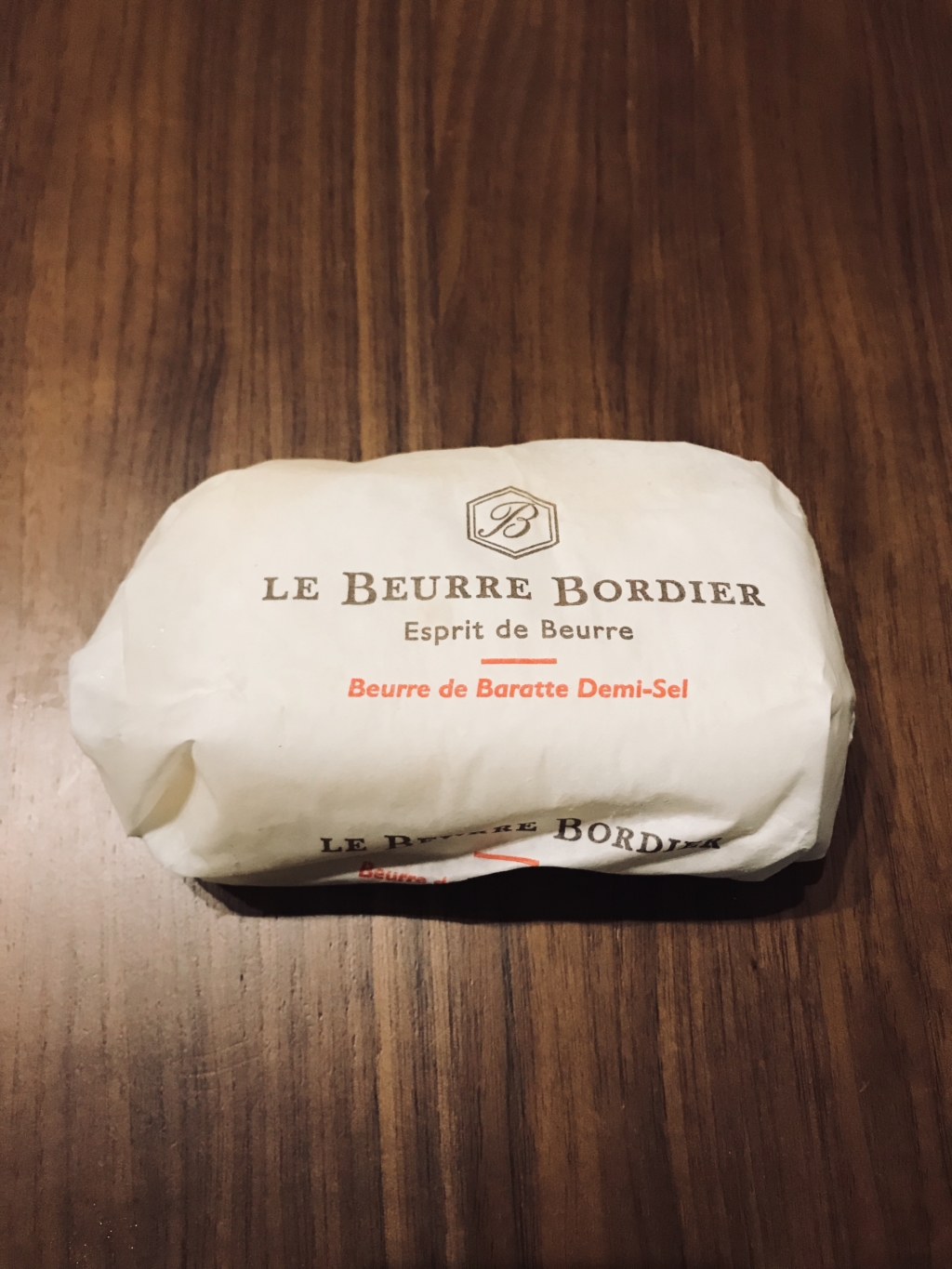
While I was wondering what to bring back, a close senior of mine told me: "Bordier is in a completely different league from Japanese butter!"
Come to think of it, I bought Bordier butter to take home the first time I came to Paris a few years ago...
I have a vague memory of it, but I can't recall the taste. So I wanted to find out again.
Why I Chose Butter as My Paris Souvenir
Bringing lots of butter back to Japan is hard.
It's heavy, and it directly affects the weight limit on your checked baggage.
You also have to balance it against the size of your cooler bag and ice packs, so you can't just buy indiscriminately,
and standing in front of the butters from so many makers, I agonized over which to buy.
In the end, after reading blog posts that compare several butters, I bought Bordier and Beillevaire butter!
Some of you may not be familiar with Bordier and Beillevaire, so here is an overview.
Bordier
Founded in 1982. This is the cultured butter of Jean-Yves Bordier, used as table butter at three-star restaurants in France and top restaurants worldwide. It is made in Brittany, France's treasure trove of food, by traditional methods with carefully selected fresh milk (delivered daily from contract farms, from dairy cows that graze on mineral-rich pasture from Brittany to Normandy), and is characterized by a smooth texture and rich aroma.
Beillevaire
Beillevaire is a butter and cheese brand loved by Michelin-starred chefs. Founded in 1980 on the outskirts of Nantes in western France, it has workshops (ateliers) devoted to fine cheese and cultured butter. Today it runs about 60 cheese boutiques in Paris and across west-central France.
Bordier is known for butters blended with flavors such as seaweed and yuzu.
If you really want to, both are available in Japan through select shops and online.
Beillevaire has a boutique in Azabu-Juban in Tokyo, and seems to carry other dairy products, such as cheesecake.
I bought mine in Paris at the gourmet hall (basement level) of Galeries Lafayette!
Below are the butters I bought. I rarely buy this much butter at once, so lining them up looks a bit strange.
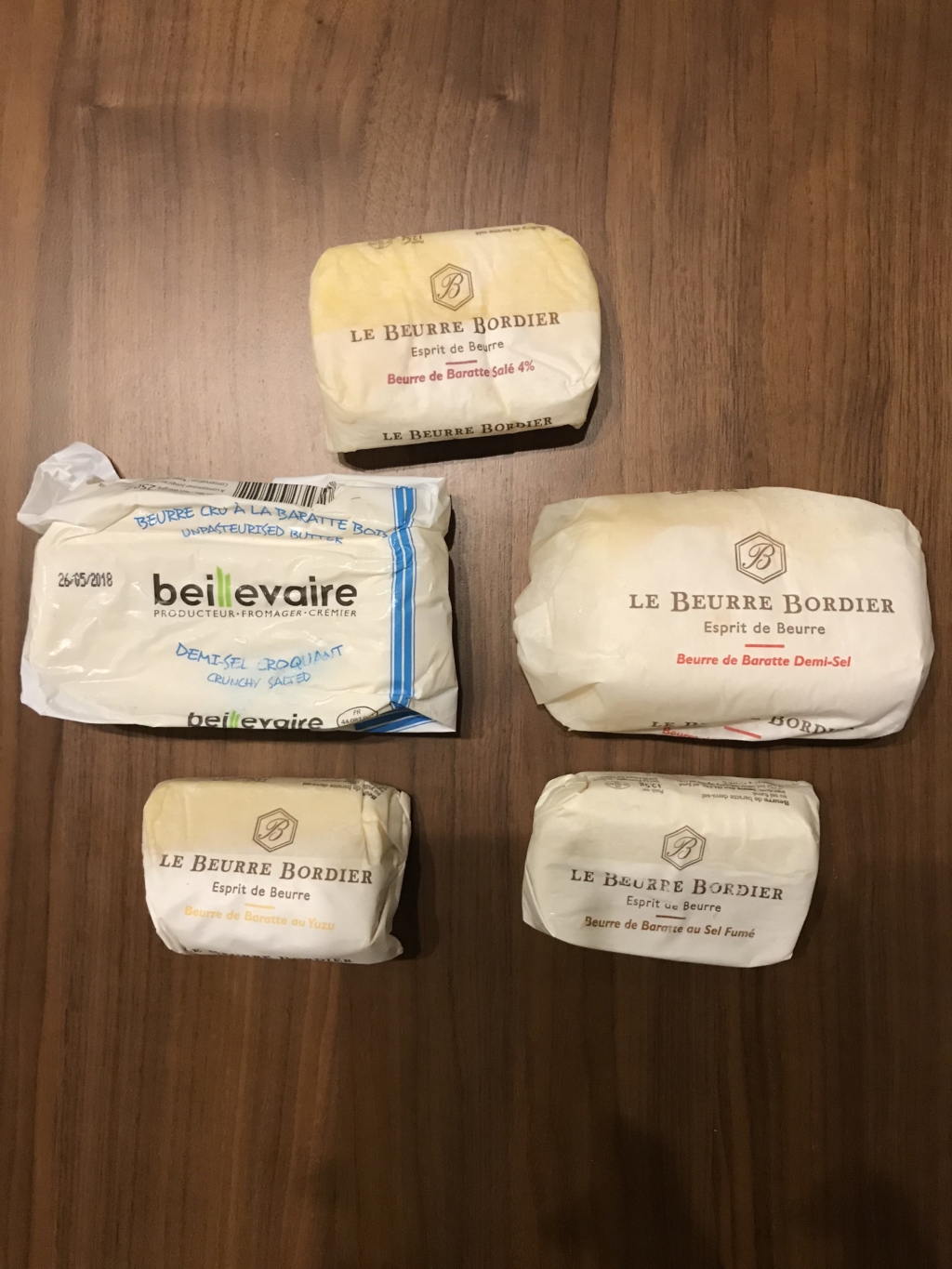
- Bordier Beurre de Baratte Salé 4%
- Beillevaire demi-sel croquant
*"Croquant" is French for crunchy. It is blended with sea salt crystals from the island of Noirmoutier.
- Bordier Beurre de Baratte Demi-Sel
- Bordier Beurre de Baratte au Yuzu
- Bordier Beurre de Baratte au Sel Fumé (smoked salt)
The smoked butter is sure to be delicious, and as a Japanese person I couldn't skip the yuzu flavor...
Including other makers, they sell dozens of varieties, so honestly I agonized a lot.
The popular one in Japan seems to be Bordier's seaweed butter, but I'd had it before, so I picked different ones this time.
French Butter Comes in Different Methods and Salt Levels
Japanese butter is only really divided into cultured or not and unsalted or salted, but French butter is classified in somewhat more detail.
There are three production methods. Butter made from unpasteurized cream is considered the finest and has a short shelf life. Bordier and others fall into the cru category.
| Method | Details | Pronunciation |
|---|---|---|
| Beurre cru | Made by traditional methods with raw cream that has not been heat treated. Rich flavor. Shelf life 2 to 3 weeks. | kru |
| Beurre Extra-fin | Made with pasteurized cream (frozen cream is not allowed). Shelf life 3 months. | ex-tra-fan |
| Beurre fin | Made with pasteurized cream (frozen cream is allowed). Shelf life 3 months. | fan |
There are also three levels of saltiness, and doux corresponds to Japanese unsalted butter.
| Name | Salt | Pronunciation |
|---|---|---|
| Doux | Unsalted | doo |
| Demi-sel | 0.5% to 3% salt | duh-mee-sel |
| Salé | 3% salt or more | sa-lay |
One thing to watch is the difference in salt between Japanese and French butter.
Japanese salted butter has about 1.2 to 1.5% salt, which corresponds to demi-sel.
But! Bordier's demi-sel has 2.8% salt... Other makers' demi-sels average about 2.0% or more as well.
So you might think: doux means sweet or soft, and demi means half...
but if you buy demi-sel or salé, it may taste saltier than you're used to.
Since people in France eat bread as a daily staple,
the mainstream butter is lightly salted (though still saltier than in Japan).
At home, it's normal to buy doux or demi-sel, and you hardly see salé at supermarkets.
Bordier's 4% Salted Butter Isn't Actually Very Salty
First I compared Beillevaire's demi-sel croquant with Bordier's demi-sel.
Did I put on too much...? Lol
Oh well, lol.
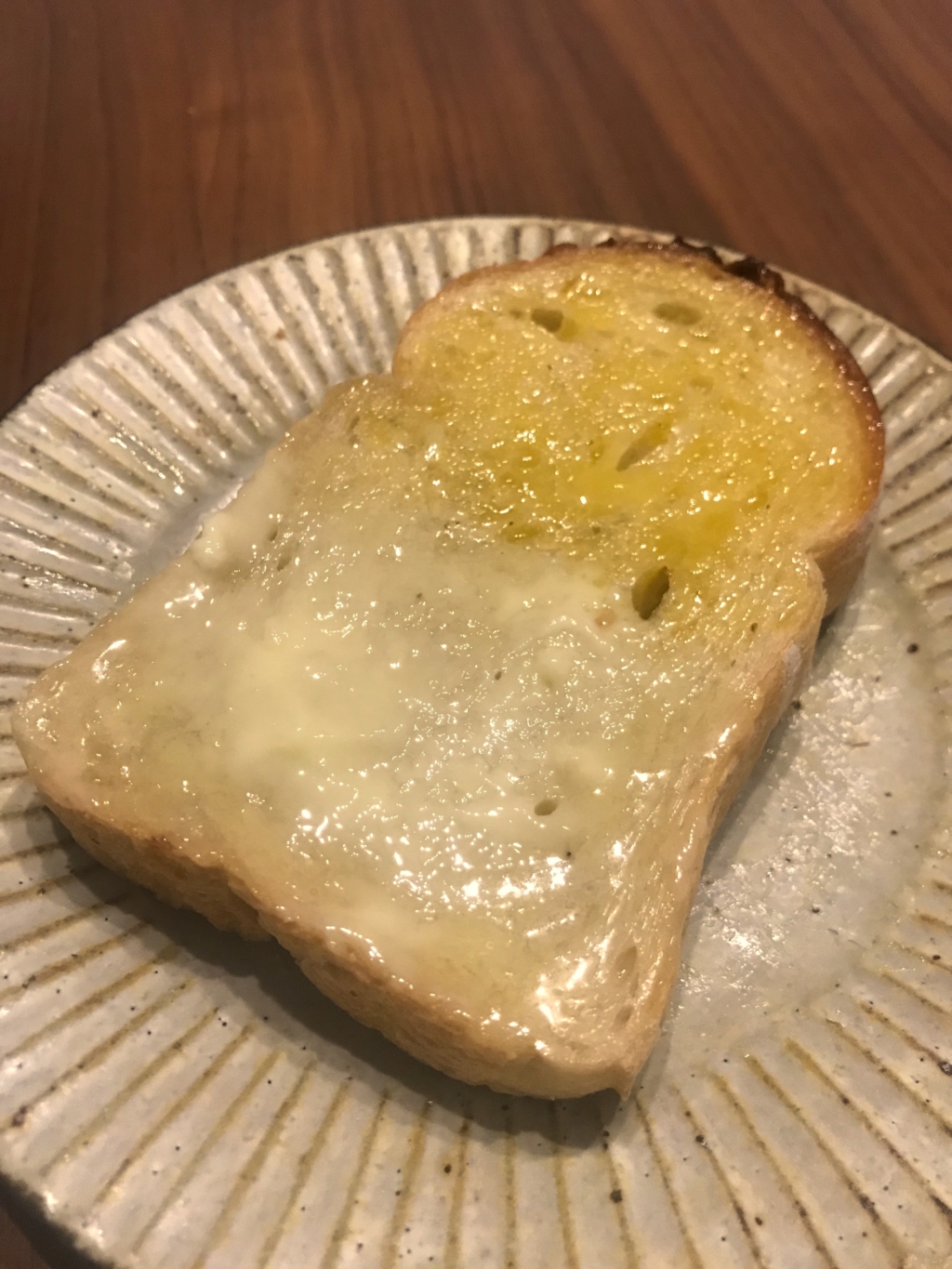
The top half is Bordier and the bottom half is Beillevaire.
Ahh... the butter soaks into the bread and it's delicious!
As you can see in the photo, Beillevaire is paler than Bordier and gives an impression closer to Japanese butter.
It tastes strongly milky.
Perhaps some of the salt grains dissolved a little while I carried it, but it tasted saltier than the Bordier.
Bordier, on the other hand, is very rich and full-bodied. It has real impact.
Next I tried the Bordier smoked butter and the Bordier yuzu butter.
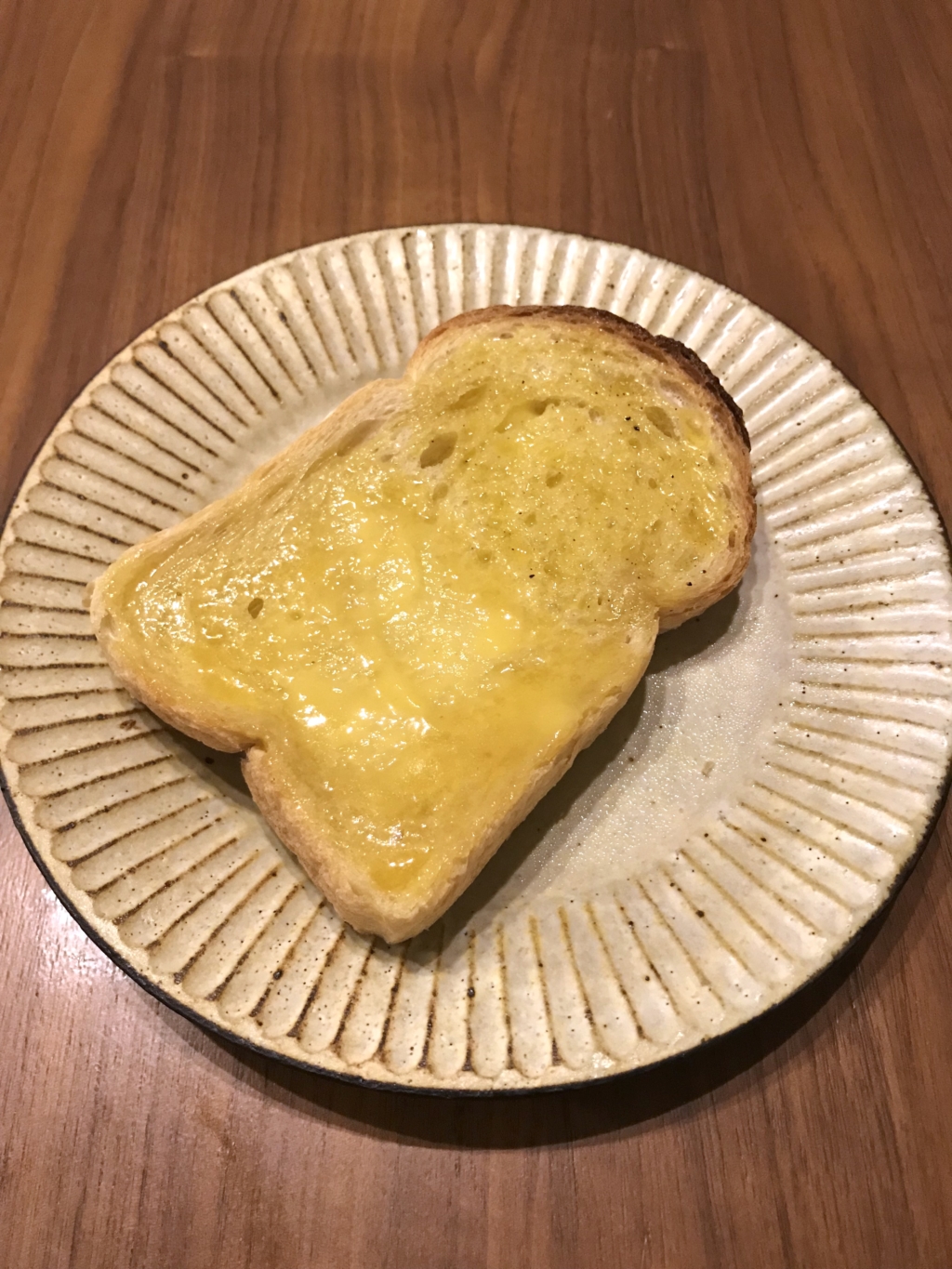
The top half is the smoked butter and the bottom half is the yuzu butter.
The Bordier smoked butter has little black specks, probably the source of the smokiness, blended into it,
and when you eat the crisp crust of the bread, the toasty aroma stands out. It would probably go well with meat, too!
The Bordier yuzu butter has a very refreshing taste.
It keeps Bordier's richness but leaves a clean aftertaste.
Even people who usually spread jam on bread could probably enjoy it without jam. I bet it would be great on grilled fish, too.
Finally, the most surprising result: Morinaga Hokkaido Butter (1.6% salt) against
Bordier at 4% salt (Bordier Beurre de Baratte Salé 4%).
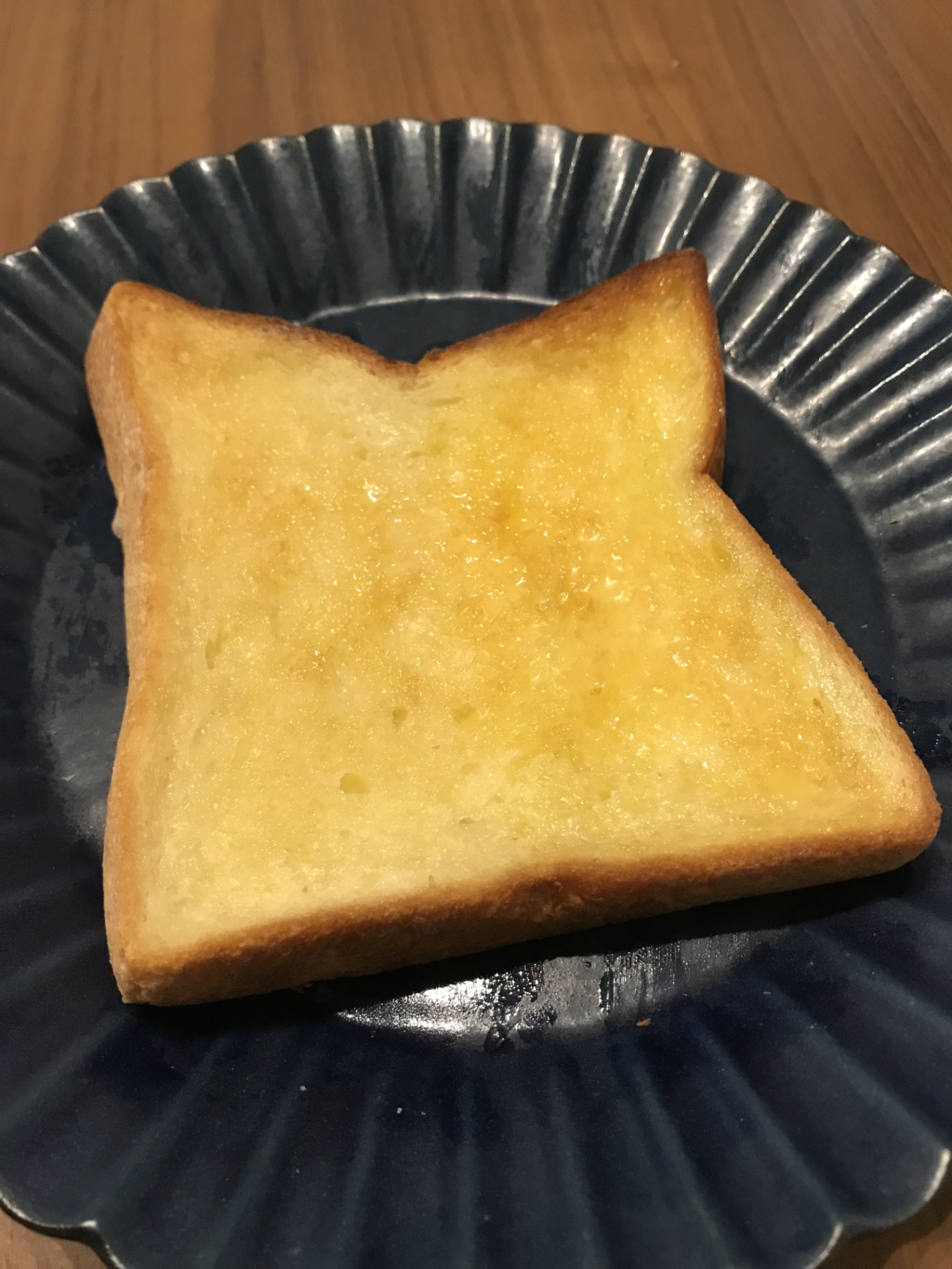
The Hokkaido butter is reliably delicious, with a gentle sweetness of butter.
Bordier's 4% has about twice the salt of the Hokkaido butter,
and I worried it would be too salty,
but honestly I didn't notice much difference in saltiness.
Maybe it was the tang typical of cultured butter, and the fact that the bread was a sweeter type...
Even compared with Beillevaire, I felt the Beillevaire tasted saltier.
It probably also depends on how hungry you are and the flavor of the bread you pair it with.
French Butter You Can Order Online
You may have no plans to go to France right now but want to try various French butters by mail order.
There are plenty of other butters, too.
In terms of availability, first there's Échiré.
Isigny is also popular.
Summary
- French demi-sel (lightly salted) butter has more salt than Japanese butter
- But the tang of cultured butter offsets the saltiness, so it doesn't taste salty! *Be careful if you are on a low-salt diet!
- Flavored butters such as yuzu and smoked are also good with meat and fish dishes
- Beillevaire for those who like it light, Bordier for those who like it rich
- Watch your checked baggage weight limit (lol)
Personally, I think Bordier's demi-sel will end up being my go-to.
Many people probably don't know smoked butter yet, so it might be fun to serve at a home party.
I hope you'll try French butter, with flavors you can't find in Japan!