What Is Natural Wine?
Translated from my original Japanese post (2018). 日本語の原文を読む →
Salut! It's Yoko, a certified wine expert.
"Natural wine" is now on the list at practically every restaurant.
It's also called "bio wine," "vin naturel," or "organic wine."
Haven't you ever thought it sounds tasty, or good for you, without really knowing why?
"Yeah, totally. But I don't really know what natural wine is."
That's exactly what the winemakers want...
So you don't embarrass yourself at a restaurant,
let's learn together what natural wine really is.
What is natural wine?
In Japan, "natural wine" tends to be sold as wine made from organically grown grapes with no added SO2 (sulfites, a preservative),
and "bio wine" as wine made from organically grown grapes.
But actually, Japan has no law that defines "natural wine"!
So whether the grapes were grown with reduced pesticides or none, as long as some chemical element has been left out of the wine, it can call itself natural wine.
"Bio wine" is the same.
It's a coined word combining "bio," meaning organic farming, and "wine."
It won't be understood in other countries. (They'd probably get the general idea, though.)
In extreme cases, a Japanese wine can call itself natural wine / bio wine even if pesticides were used to grow the grapes.
That feels a bit off, doesn't it?
Natural wine in France
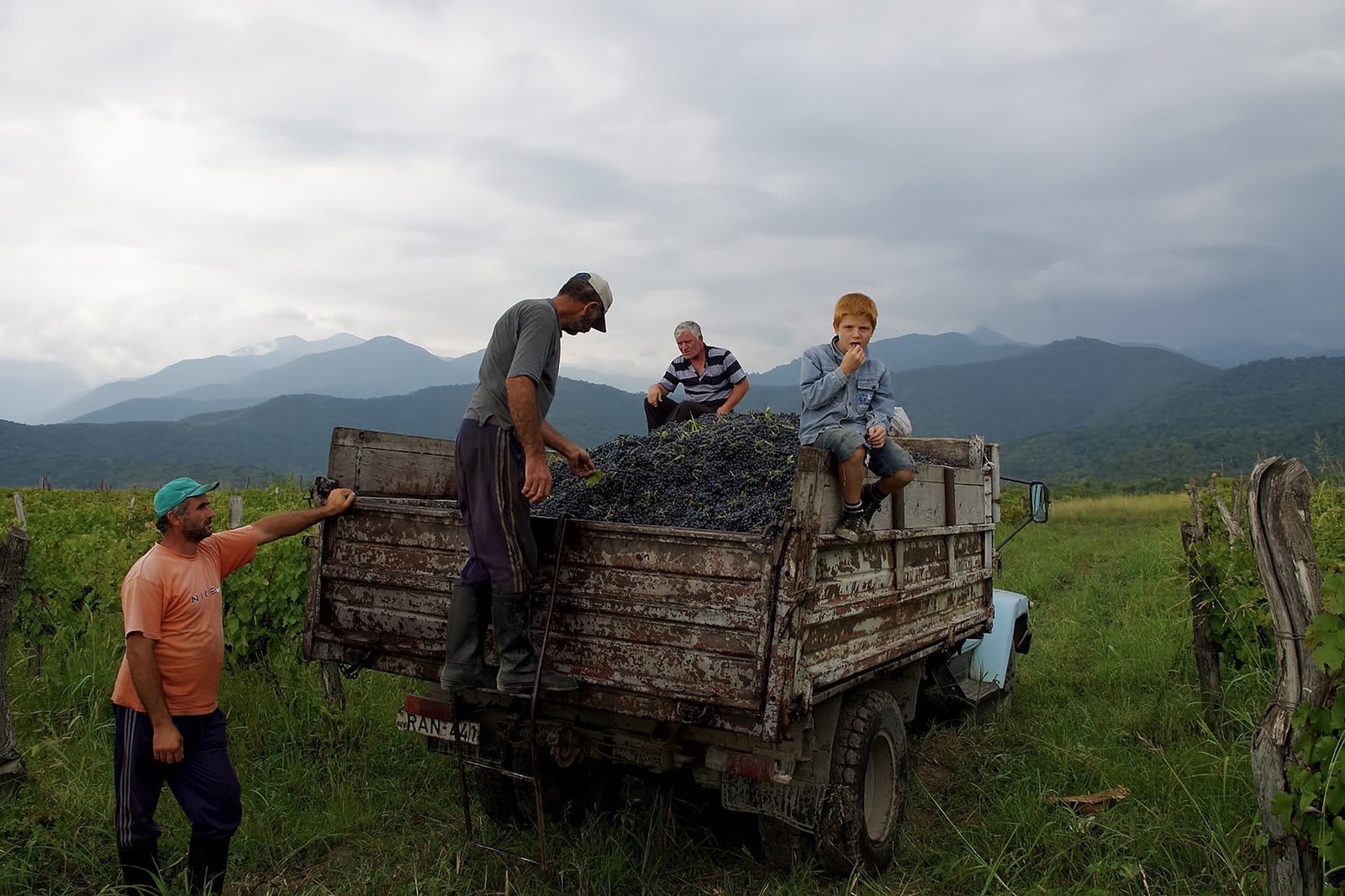
So how does France, a major wine producer, handle it?
In France, natural wine is called Vin Naturel,
but there is no clear standard for how it must be made.
The farming method most widely used for wine in France is lutte raisonnée.
Beyond that, grape growing is divided into biologique and biodynamie.
Lutte raisonnée
In French, Lutte raisonnée.
Grapes are grown organically, with no chemical fertilizers or herbicides at all, but a very small amount of pesticide may be sprayed when it's truly necessary, for example for vine disease.
Because a small amount of pesticide is allowed, whether to count this as natural wine is a matter of opinion.
That's why, under EU law, wine made with lutte raisonnée cannot call itself "organic wine."
Biologique
In French, Biologique.
Genetic modification, insecticides, herbicides, chemical fertilizers and pesticides are prohibited. Organic fertilizers approved by the EU are allowed.
Biodynamie
In French, Biodynamie; in English, biodynamics.
Organic farming without chemical fertilizers or pesticides, plus farming in line with the lunar calendar and the movements of the stars.
It's a slightly spiritual approach, with sowing timed to the phases of the moon and crushed crystal sprayed to strengthen the roots.
Biodynamics was advocated by Rudolf Steiner, a mystic thinker and philosopher,
and in Japan, a farm called Pokkowapa Kobunsha in Chiba Prefecture was reportedly the first to adopt it, in 1985.
There are even books that tell you when to sow each plant!
Since biodynamics assumes no pesticides, you could say it's a kind of biologique.
Does natural wine mean no headache?
"Natural wine doesn't give you a headache."
"Wine that isn't natural gives you a headache because of the preservatives." Have you heard that rumor?
The preservative is sulfite, an ingredient used to keep wine in good condition.
Sulfites destroy "glutathione," the substance the liver uses to break down the alcohol in wine.
That's why people say natural wine won't give you a headache (that is, without preservatives, the alcohol can be broken down).
But sulfites suppress harmful bacteria and prevent wine from deteriorating, so they're not all that bad.
During winemaking they're added to the juice several times, such as during alcoholic fermentation and before bottling.
Even without that, sulfites occur naturally in trace amounts during fermentation, and they can be found in beer and dried fruit,
so removing them completely is difficult.
There's also the claim that, regardless of preservatives, red wine is more likely than white to give you a bad hangover.
Red wine contains more methanol (a component of alcohol whose breakdown gets pushed to later) than white,
and more impurities (because it's fermented with the grape skins to extract tannins).
Red wine puts more load on the liver than white.
In other words, even natural wine can still give you a headache.
It's also said that when sulfites are aggressively filtered out to make wine with no preservatives,
the filtering strips out the wine's flavor as well,
so don't be swayed by catchphrases, and enjoy wine without overdoing it!
Look for certification marks on natural wine!
More than 100 public agencies and private organizations certify natural wine,
and wines that meet an organization's standards can display its certification mark.
You usually can't tell at a glance whether a wine is natural wine, so it helps to know the marks!

Here are the three main ones!
ECOCERT
A French private organization with worldwide recognition.
Producers must have used organic farming for at least five years, and artificial synthetic fertilizers and chemicals are banned.
AB (Agriculture Biologique)
A French public body. At least 95% of the raw materials must be organically farmed, and the product must be produced or processed within the EU.
Demeter
A German private organization that promotes biodynamics. Naturally, wine isn't certified unless it uses biodynamic farming.
Of the three, it's the only one that also has detailed rules on winemaking methods.
By the way, plenty of wineries use organic farming without going through any certifying body.
None of these three organizations prohibits the use of sulfites, so be careful not to remember it wrong!
Natural wine isn't automatically delicious
There's no correlation between natural wine and deliciousness.
The most distinctive thing about natural wine is its taste and aroma, and people's preferences really differ on that.
Personally, I can drink natural wines with a "dashi-like" (brothy) taste all day.
But some give off a peculiar smell, called "reduction aroma" or "bio smell," like boiled eggs,
and I'm not a fan of that type of natural wine...
It somehow makes me feel that "bacteria have multiplied and caused this smell."
On the other hand, some people love that type of natural wine, so whether it tastes good depends on the person.
By the way, wine develops off-smells if temperature control during shipping or storage is poor.
When buying wine at a shop, it's reassuring to choose bottles kept at controlled temperature in a dedicated cooler and clearly labeled as shipped by reefer (refrigerated container).
I'm a wine lover and drink wine at restaurants about half the week,
and probably thanks to the organic boom, most of the wines on restaurant lists are natural wines.
But I never choose a wine because it's "natural wine."
Just like any other wine, I choose it by whether it has the flavor and aroma I like.
That's because I don't think natural wine is necessarily delicious, or that it prevents hangovers.
The fun of wine is that even the same grape variety tastes totally different depending on farming method and region.
Don't be swayed by buzzwords. Choose a wine in good condition and enjoy it!