Getting Rid of H. Pylori: Notes on What I Ate
Translated from my original Japanese post (2018). 日本語の原文を読む →

As a kid, I loved the Yakult the neighborhood ramen shop gave out as a freebie. It's Yoko.
Good evening.
As of today, my week of H. pylori eradication treatment is over...!
Giving up alcohol was tough!!
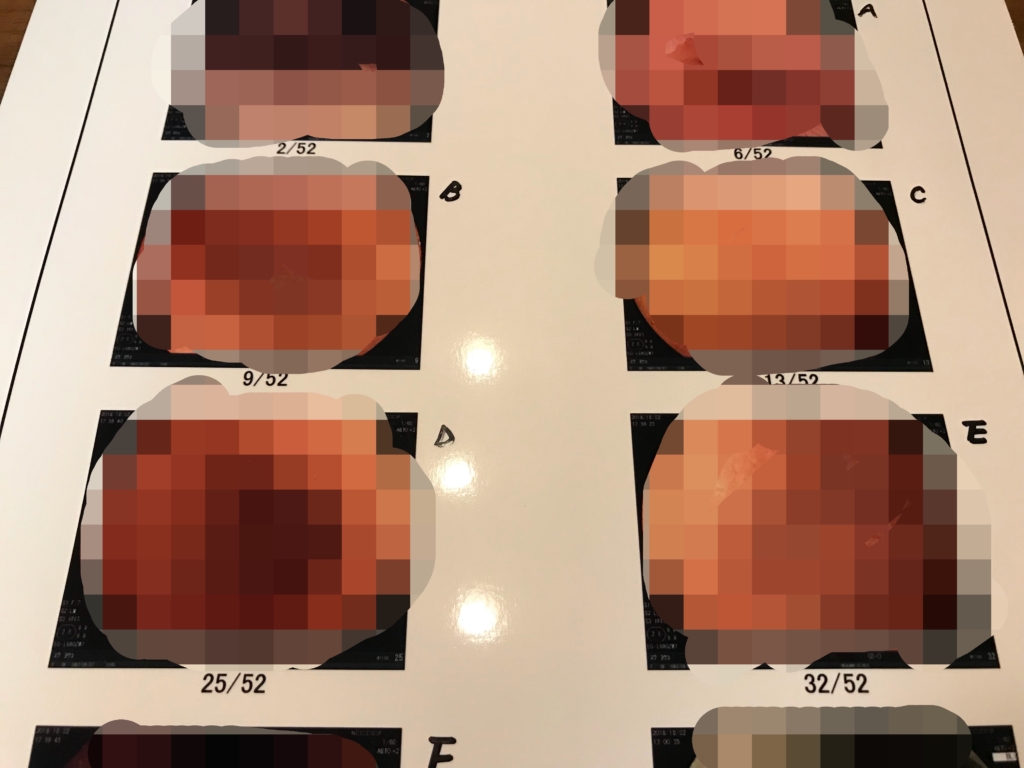
Looking back, a few months ago my annual medical checkup came back positive for H. pylori and I was sent for a detailed exam,
and the gastroscopy diagnosed me with "atrophic gastritis," which is how this started.
>>Does it hurt? My First Gastroscopy (Upper Endoscopy)
The eradication medication is taken for one week straight
This is H. pylori, a scary bug with a cute name that can cause stomach cancer...

(Source: Hyogo College of Medicine, Department of Gastroenterology)
There are all kinds of bacteria in the stomach, but H. pylori is said to cause stomach cancer.
So if a gastroscopy finds gastritis, treatment is covered by insurance.
To get rid of H. pylori, all you have to do is take medicine.
To boost the effect, you take it for one week straight, and it comes packaged on a sheet like this.
(Don't tell anyone, but the first time I saw it, I mistook it for Bob Sapp)
There's a date column to keep you from forgetting a dose, and once you peel off the backing, you can pop out 2 tablets and 3 capsules all at once, which is super handy.


Normally the sheets are separated by type of medicine, right?
There's no worry about taking the wrong number, which is reassuring!
On top of that, I also took 2 tablets of a medicine called Miya BM.

Miya BM is a medicine that regulates intestinal function, and you can take it even when you're not sick.
Depending on the hospital, you might be prescribed something different.
All in all, I was taking 14 pills a day.
No side effects
Neither before I started taking the H. pylori medicine nor now that I've finished have I noticed any change in how I feel!
I had braced myself for some heartburn or the like, but I felt nothing at all, so I actually worried whether the bacteria had really been eliminated (lol).
From what I found online, some people get headaches, a taste disorder where food tastes strongly bitter, or swelling or hives from a bad reaction to the antibiotics.
I didn't want a taste disorder, so I avoided taking the pills right before meals, but my food never tasted bitter.
It was a perfectly comfortable week!
No coffee or alcohol during treatment!
I had no side effects, but this part was hard instead.
I was told by my doctor to avoid alcohol, because alcohol is said to weaken the eradication effect.
I wanted the first round of treatment to succeed, so I resolved not to drink any alcohol for the whole week.
I figured a week without alcohol would be a piece of cake! But it was surprisingly tough...
I love eating, and wine is my hobby, so of course I wanted a drink...
How many times I almost forgot I was off alcohol and started to order a fresh grapefruit sour...
"One fresh grapefruit sou... a soda, please! Soda!"
That kind of thing...
But without alcohol, I woke up feeling refreshed in the morning!
The other thing I avoided during treatment was coffee.
My doctor said there were no dietary restrictions other than alcohol, but I wanted to kill the H. pylori perfectly in the first round (I don't want to quit drinking over and over), so I did a lot of research.
And I found out coffee isn't recommended either. Oh no!
The eradication medication consists of two antibiotics and one drug that suppresses stomach acid. The antibiotics are what kill H. pylori, and they are known to work best during the bacteria's growth phase. This growth phase occurs when the environment around the bacteria is less acidic. That is why a stomach-acid suppressant is added to the eradication medication to create that condition.
Now, coffee: its caffeine stimulates the secretion of stomach acid. Stomach acid is acidic, so it's undesirable during eradication. You don't absolutely have to avoid it, but it's better to cut back.
(Quoted from: Coffee during eradication | H. pylori Q&A | Pylori-Kin Net)
I'd recently gotten into coffee and had been given some and bought some, so this was hard too (T_T)
I read that it's best to take the medicine on an empty stomach, when H. pylori multiplies easily (when it's less acidic), so I took it right after waking up and an hour before dinner.
I also made sure to eat foods that seemed likely to help the treatment work better.
LG21 yogurt to raise the success rate
What I ate during treatment, no. 1! LG21 yogurt.
LG21 yogurt contains a lactic acid bacteria strain called OLL2716,
and I found experimental results showing that eating it before and during eradication raises the success rate.
229 people infected with H. pylori were split into two groups: one received standard eradication therapy (triple therapy), and the other received triple therapy plus OLL2716 lactic acid bacteria yogurt (90 g per serving, twice a day), eaten for 3 weeks before treatment and 1 week during treatment, 4 weeks in total. Comparing the two groups, the eradication success rate of the group that combined the yogurt with triple therapy was about 10% higher than that of the triple therapy group alone.
(Quoted from: Test results for lactic acid bacteria OLL2716 strain (H. pylori))
I started eating it three days before the eradication began and kept eating one every day during treatment!
Yakult to improve the gut environment
What I ate during treatment, no. 2!
Yakult.
Yakult usually brings to mind those tiny bottles, but I drank Miruju, a type you can gulp down.
Yakult contains a lactic acid bacteria called the Shirota strain, and taking the Shirota strain has the effect of increasing bifidobacteria in the gut.
(Source: What is the lactic acid bacteria Shirota strain? | Shirota strain.jp)

There are apparently various kinds of bifidobacteria, and one called "Bifidobacterium BB536" in particular helps relieve ulcerative colitis.
Ulcerative colitis is thought to develop when the body's own immune response goes awry. The lining of the large intestine becomes inflamed, causing symptoms such as erosions and ulcers. It is known that taking "Bifidobacterium BB536" eases these symptoms.
(Quoted from: [Morinaga Milk] What are the effects of Bifidobacterium BB536? – Mainichi Nyu Life)
I don't have colitis, but I drank it hoping the Shirota strain would keep my gastritis from getting any worse.
I drank cocoa, which is effective against H. pylori
What I ate during treatment, no. 3!
Cocoa.
Cocoa has the effect of preventing H. pylori from attaching to the stomach and suppressing its growth.
(Source: The H. pylori-killing effect of cocoa | Cocoa Report)

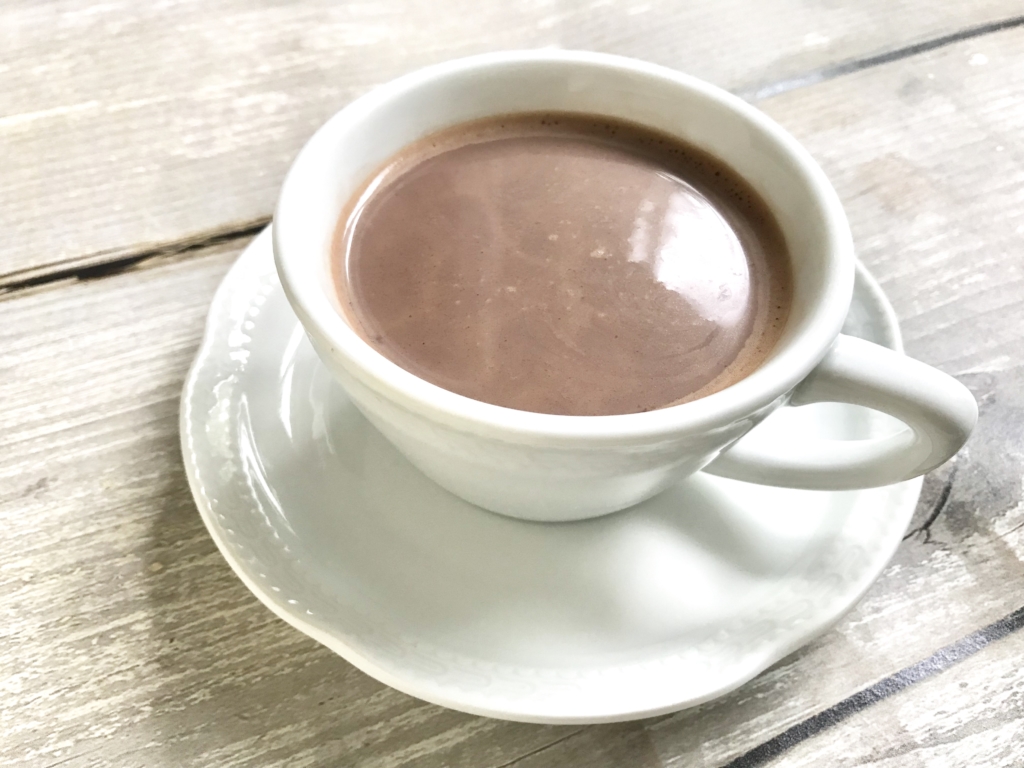
In the morning, after taking the H. pylori medicine, I made and drank hot cocoa.
I've also heard of someone who got rid of H. pylori by drinking cocoa every day for two years,
so even after I finish the medicine, I want to keep drinking it regularly as a preventive measure.
Manuka honey, which has antibacterial properties against H. pylori, is also recommended
Manuka honey contains a component called MGO (methylglyoxal), which has an antibacterial effect.
A UK study found that manuka honey at a 5% concentration wiped out H. pylori,
and I try to take manuka honey myself when I feel like I'm coming down with a cold, and even a scratchy throat clears up quickly.
There are also supplement-type manuka honey products that contain lactic acid bacteria.
The supplement type keeps its antibacterial effect going longer than regular manuka honey.
With a supplement you just take it with water, so I recommend it if you don't like sweet things or want an easy way to take it!
Added 2020/6/29
The WHO has announced that processed meat, beef and pork may cause cancer.
I've summarized what is risky about eating meat and how much, so if you want to be careful about your diet, please take a look.
The carcinogenic risk of processed meat, and its role in environmental destruction... the dark side of eating meat you should know about
Get tested for H. pylori to prevent stomach cancer
In my case, I was infected with H. pylori and had chronic gastritis, yet I had almost no symptoms.
The thought of leaving it alone without noticing, and then finding out I had a stomach ulcer or stomach cancer, is too scary.
To avoid it being too late, you can find out whether you're infected through a stool or blood test,
so I recommend checking at the time of your regular health checkup.
If going to a hospital is a hassle, there are home test kits for H. pylori too.
If you think "I'm already infected!"
or "I'm about to start eradication!", I'm rooting for your treatment to succeed!
Bye-bye, Mr. Pylori! (^_^)/