How the French Eat at Home
Translated from my original Japanese post (2018). 日本語の原文を読む →
When I stayed with a host family in France,
I got to see the real daily eating habits and home cooking that you can't pick up from just traveling there.
The French Love Their Markets
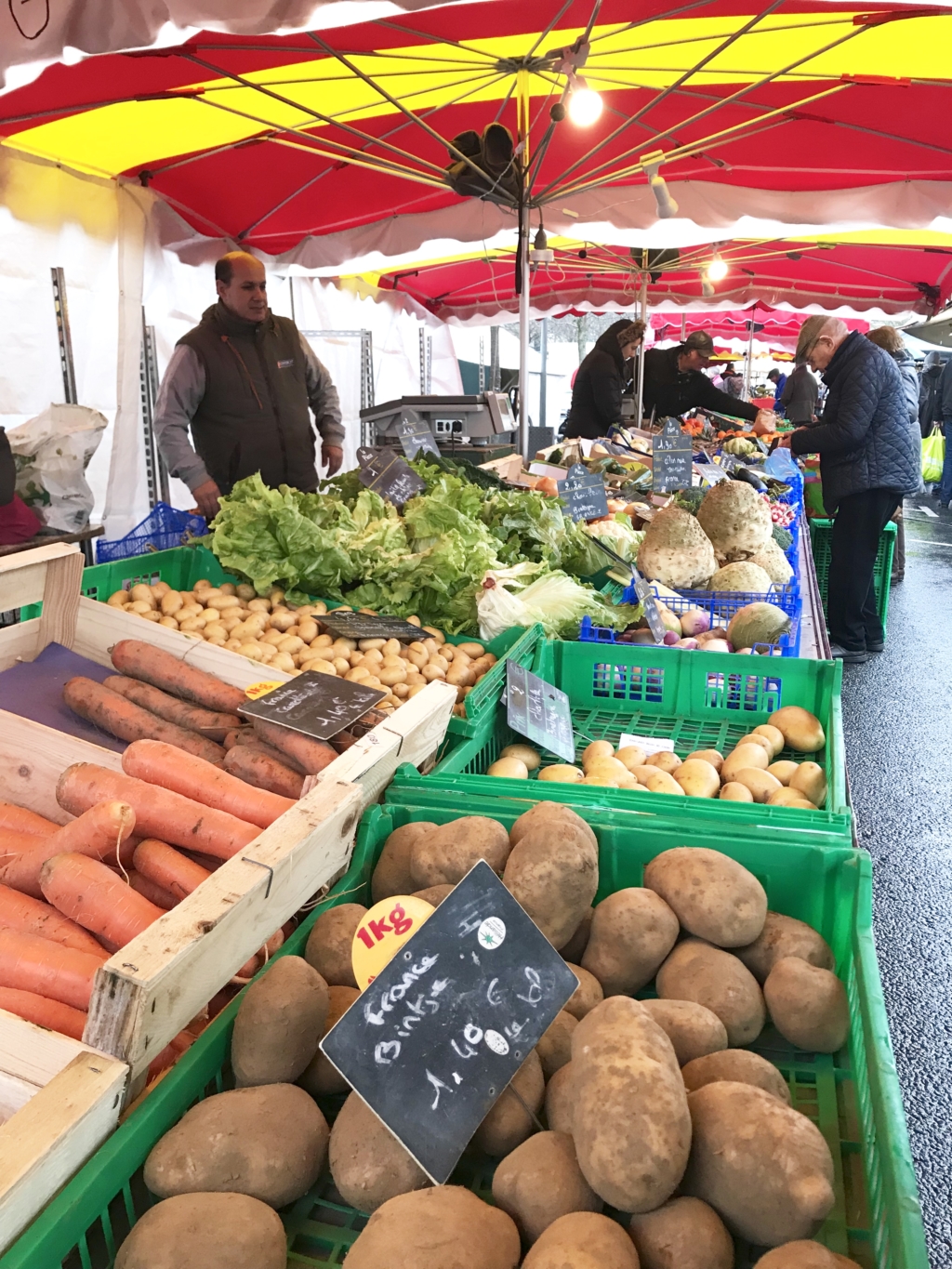
The French love their markets (marchés).
Usually once or twice a week, from morning until late afternoon on weekends, a market is held somewhere in town,
and it's bustling whenever you go.
You can find everything at the market!
The basics are vegetables, fruit, wine, meat, fish, jam, eggs, and cheese,
and there are also prepared foods like crêpes, soups, and sautéed dishes.
Some markets sell everything organic (bio), which is very appealing.
Supermarkets sell plenty of groceries too, but the selection of meat can be small
and the vegetables a bit wilted, so it's often not a lineup that makes you want to buy.
What you buy at the supermarket is mostly yogurt, milk, wine, preserved foods, and household goods.
One fun thing is that some have a machine for making fresh orange juice.
It costs about €2 a bottle, and you operate the machine yourself to buy freshly squeezed juice.
Supermarkets are usually open until around 8 p.m. Since France has no convenience stores,
they're also a handy place to dash to when you suddenly need something.
They Don't Eat Out Often
Eating out in France, especially in Paris, is very expensive, so unfortunately you can't casually go out to eat very often.
To be a bit vague about it, a lunch set at a reasonably good restaurant averages more than €20.
At the current exchange rate, that's close to ¥3,000.
What surprised me while studying abroad was a time I had lunch sitting on a high stool at something like a bar counter in a brasserie.
When the bill came, I was shocked. It was about €60...
The food was restaurant quality, with things like grilled pigeon, and really delicious, though.
Places like Japanese izakaya, where you can have a proper meal and also drink, aren't really part of the culture,
so bars often don't have much to eat.
Lately there are more places serving tapas, but if you want a proper meal, you have three choices: have an apéro at a bar and then eat at home,
have an apéro and then move on to a restaurant, or just go to a restaurant.
* Apéro: a light drink with nibbles before dinner, sipped slowly. It's short for apéritif.
A Full Course Meal at Home?!
In French homes, it's normal to finish one dish before the next one is served.
In Japan, with the ichiju-sansai (one soup, three sides) tradition, many dishes are laid out on the table at once,
and you alternate among them, a way of eating we call sankaku-tabe (triangle eating).
In France, the dishes generally come out one at a time: salad, soup, main dish, cheese, then dessert.
(Cheese counts as dessert. Sometimes it's only cheese, or yogurt.)
And interestingly, after each dish, they wipe the plate clean with baguette.
From a Japanese point of view, that might seem a bit rude or unseemly.
But it's really not so different from bouncing your side dishes off a bed of rice in Japan,
and the plates end up clean, so they're easier to wash.
Curry Is Eaten with a Fork
One afternoon, I was eating curry with a French friend.
I was thinking how curry is basically Japan's national dish when I glanced at her and saw she was scooping it up with a fork.
Surprised, I asked her why.
She laughed and answered, "Using a spoon is like a baby eating... it's childish!"
So when the French eat something with lots of liquid, like soup pasta or curry, they use a fork.
If you're thinking they can't possibly finish it neatly, that's where the baguette comes in.
They're Casual About Baguettes
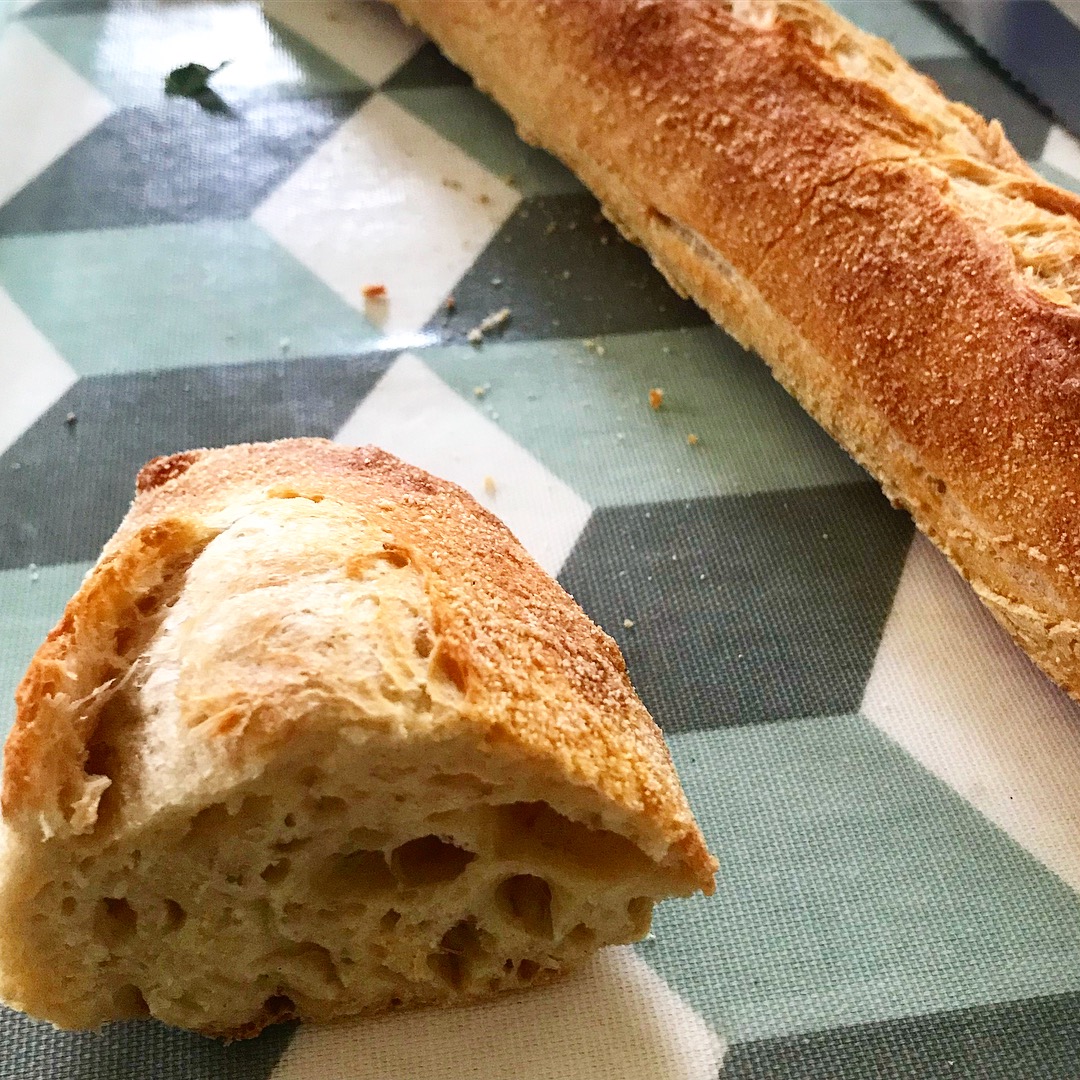
Baguette isn't only for wiping plates. You also top it with pâté or rillettes.
The baguette is treated like a knife and fork, so it goes straight on the table, not on a plate.
That means crumbs get scattered everywhere as the meal goes on.
But the French way is not to worry about such small things.
You can just wipe the table when you're done!
Super Simple and Practical
On days when they're not going all out (ordinary days, not dinner parties), a meal has one or two dishes at most.
At the house where I stayed, dinner was usually just salad, a main, and cheese (or dessert, or yogurt).
The main wasn't anything fancy either: a whole roast chicken, braised fish, pasta, pizza, and so on.
There was also quiche and lasagna, but those felt like the effortful side of things (lol).
It's simple, but the vegetables are full of flavor and the cheese is delicious, so somehow it all works.
In Japanese terms, it's like: tonjiru (pork miso soup), done. Curry, done.
A Japanese person might think that's cutting corners,
but after living in France for a while and coming back to Japan, I was struck by how many dishes a home meal has and how delicately it's plated.
After all, the employment rate for French women is a remarkable 83% (2013, source: OECD),
and I get the feeling that the attitude is, why stress over everything when simple food that tastes good is enough?
I can't help feeling that Japanese people could also look at home cooking from a more practical perspective and live with a little more breathing room. Or is that just me?